DRAWNONWARD
Heidi Axelsen + Hugo Moline
Plant seeds, earth, bags, rope, felt, biodegradable plastic.
Blue Mountains Cultural Centre.
Commissioned as part of Critical Mass: The Art of Planetary Health at Blue Mountains Cultural Centre curated by Sabrina Roesner.
Plant seeds, earth, bags, rope, felt, biodegradable plastic.
Blue Mountains Cultural Centre.
Commissioned as part of Critical Mass: The Art of Planetary Health at Blue Mountains Cultural Centre curated by Sabrina Roesner.
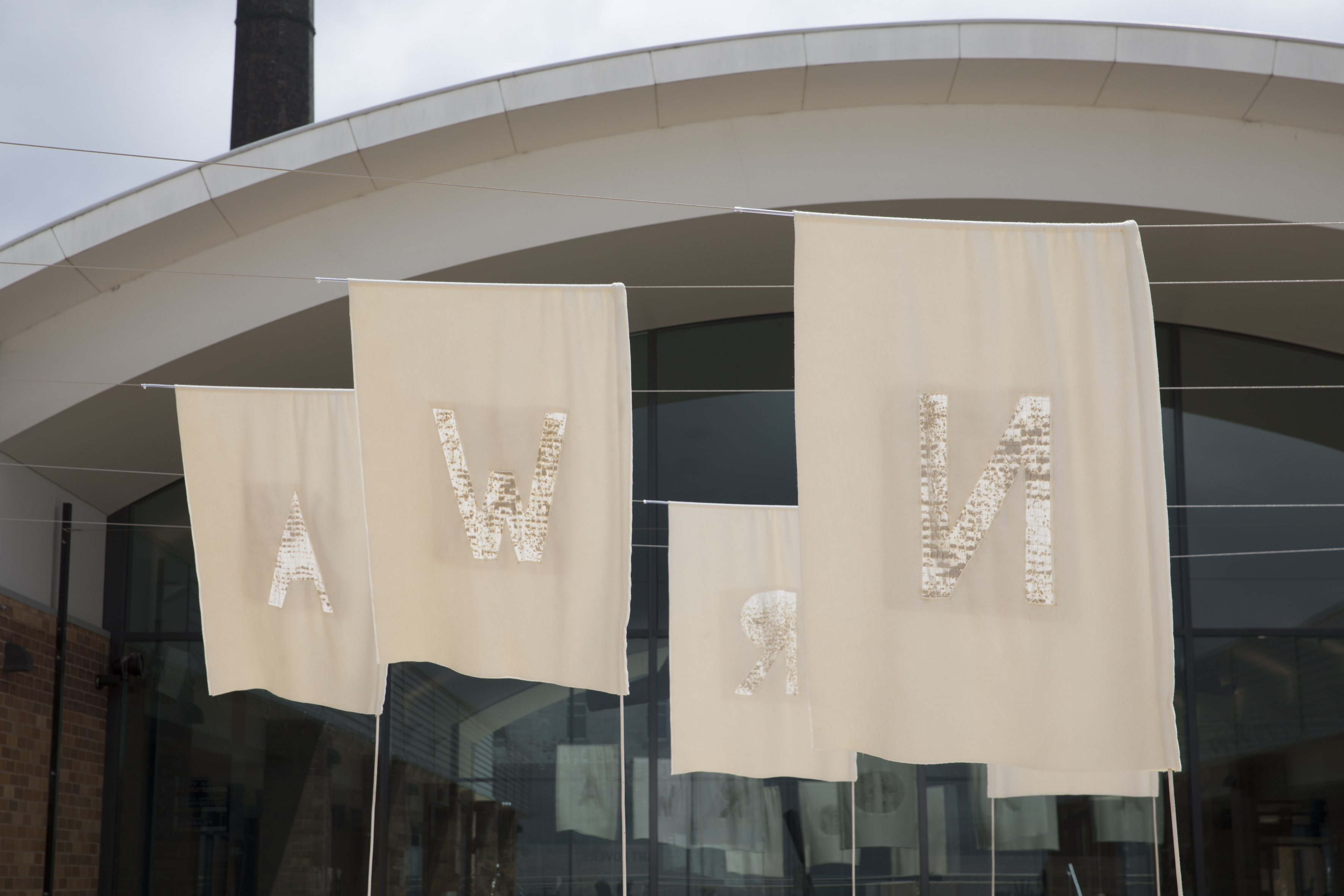
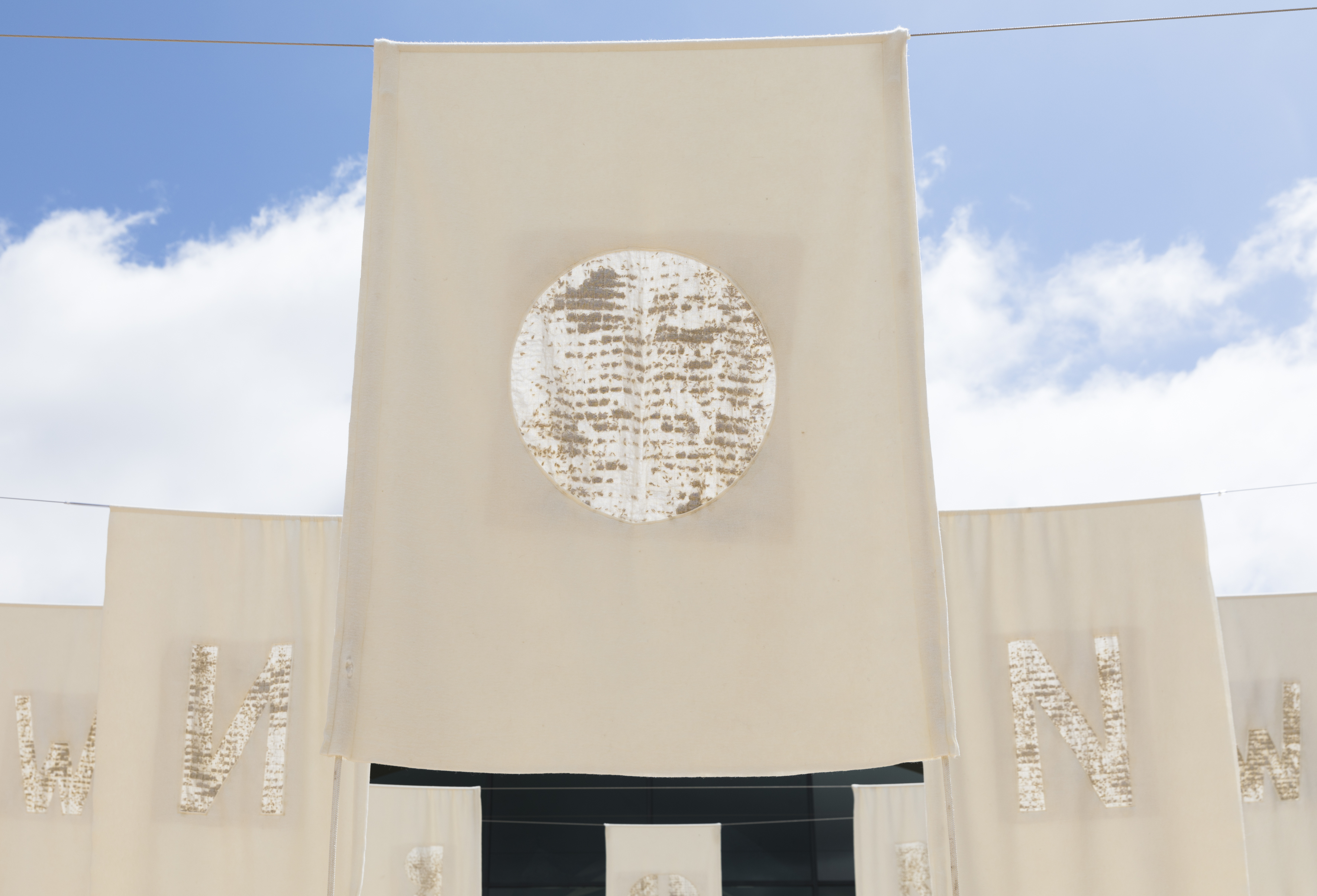 DRAWNONWARD. Heidi Axelsen and Hugo Moline. Felt, muslin, fennel seeds, rope and dirt. Image by Silversalt photography.
 Speaking as a species, we are certainly having some problems relating to the Earth. Perhaps this might be a good time to consider some other ways to relate with her?
For a while now we have felt the need to mark out bits of the Earth as belonging to me or you or us or them. Flags become symbols of this humanised territory, from real-estate to the nation-state, they stake a claim of permanent possession.
Plants consider territory in a very different way. Plants claim land with their bodies alone. They do not own, they just reside. Unlike ours these claims do not require exclusivity. Rather their nations overlap, are interwoven and concurrent.
Learning from the plants we would like to propose more soluble forms ownership. If you are here, its yours for the moment you are here (together with whoever else is here of course).
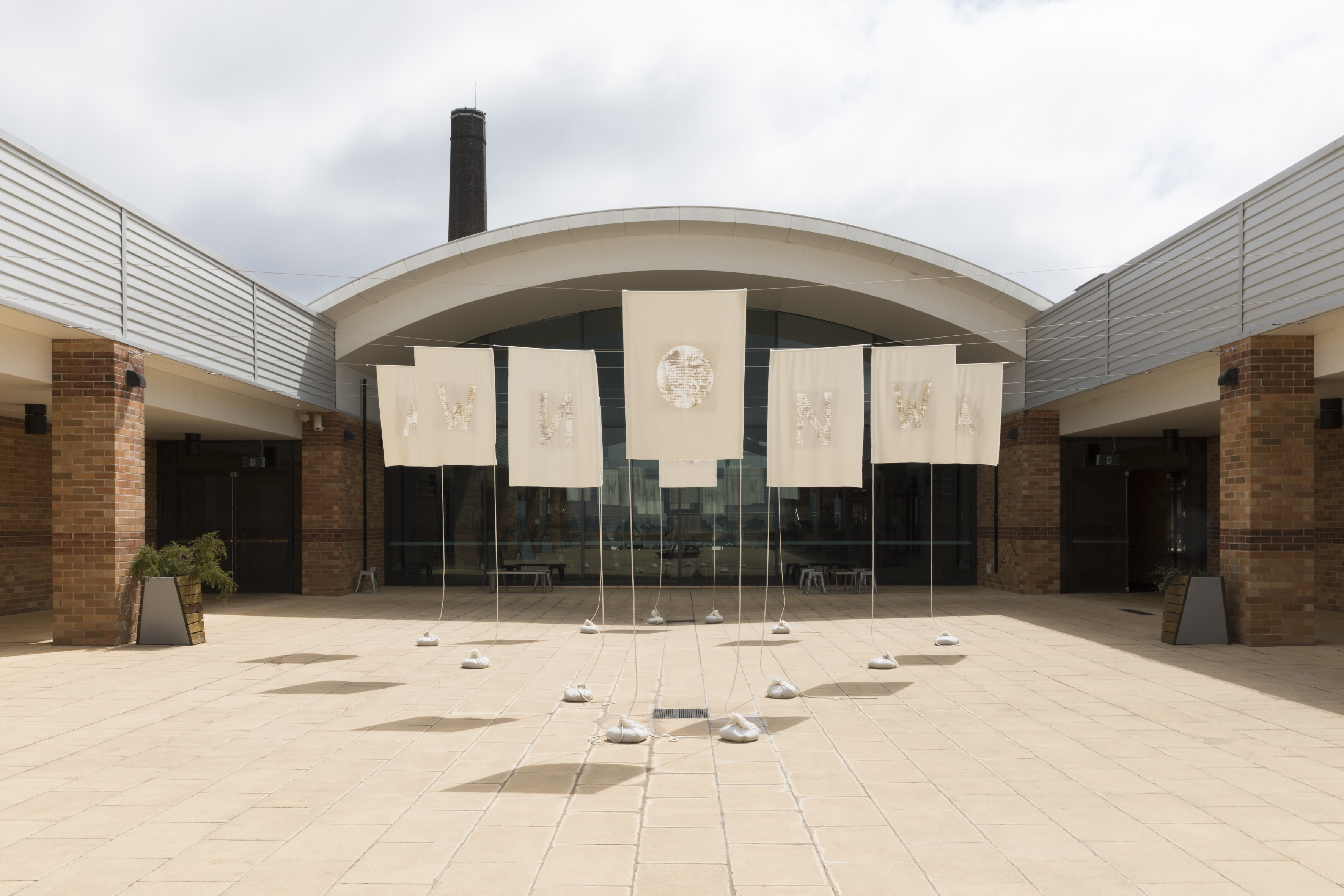
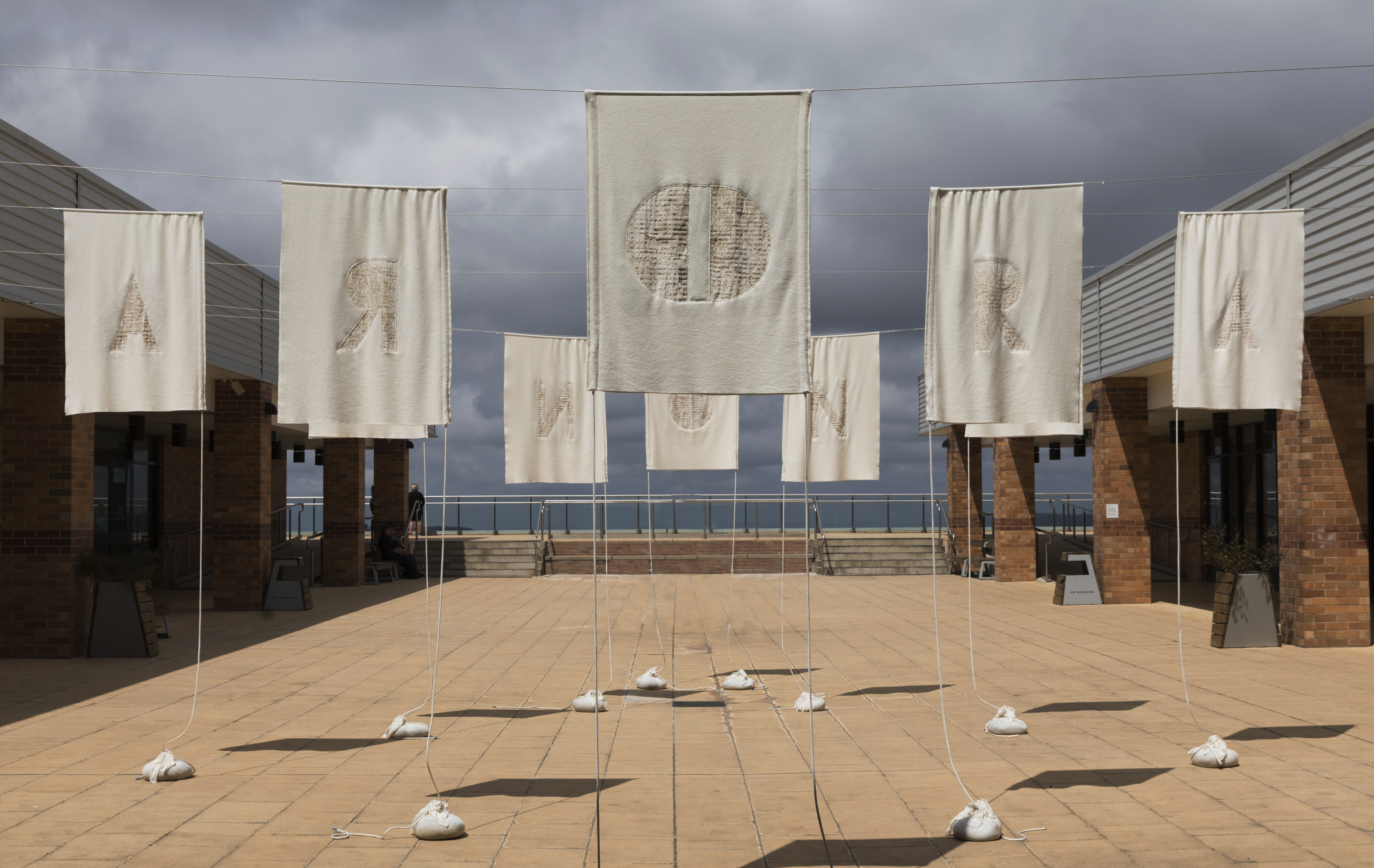
In DRAWNONWARD ten flags mark out a small territory, a little United Nations of dirtbags. Unlike the flags of human nations these flags are designed to decompose. Their substance aiding the growth of the seeds which they contain. The seeds have been gathered from roadside weeds, species which claim leftover terrain, species which will be the first to take over after our departure.
Like the palendrome, drawn onward: in order to move forward we need to constantly return.
------------
Fairley, G. (2020, October 5). Artists provide reflections on eco-anxiety. ArtsHub.
Collective conversations for change
‘Whether social activists or traditional owners, these artists provide reflections on eco-anxiety, yet remain hopeful for the future state of the world,’ Roesner said.
Through creative responses, these artists examine the roles that traditional knowledge, technology, science and human ingenuity can, and must, play in stabilising our environment and developing a more equitable society, she continued.
Take, for example, the work of locally-based Heidi Axelsen and Hugo Moline, who’s installation DRAWNONWARD (2020) demarcates a small territory of white flags in the gallery, what Axelsen describes as, ‘a little United Nations of dirtbags.’
It is a ‘comment on our constant need to claim and own the land we live on,’ she continued. ‘[But] unlike the flags of human nations these flags are designed to decompose.’
The seeds they hold within ‘have been gathered from roadside weeds, species which claim leftover terrain, species which will be the first to take over after our departure.’
She told ArtsHub: ‘On the surface, these white flags could be perceived as gestures of surrender, resigned to the failure of humanity and giving way to life beyond our own… If we are going to start anywhere, first of all we need to listen to the experts; the scientists and the Indigenous people who study and deeply understand natures systems.’
Nature has been quietly knocking at our door for some time and is now getting impatient. Heidi Axelsen, artist.
Hugo Moline, who collaborates with Axelsen, added: ‘The only way we can get out of the mess we are in, towards something better, is to realise how connected we all already are, how dependent we are on each other.That is what we like to do in our practice. To consider other ways we could arrange the world, that serve to highlight contradictions in the way we organise it now. These scenarios, such as people devoting their lives to serve plants, seem on the surface a bit ridiculous, but considering how important plants are for our survival, maybe not so ridiculous after all?’ Moline said.